

In Vitro Automated Simulated Digestion System (SDS III)
PRECISE LIVESTOCK FEEDING, OFFER WHAT ANIMALS EXACTLY NEED.
In modern livestock production, precise feeding and enhance ingredients’ utilization rate have always been key solutions for achieving sustainable development. But, the prerequisite is that we must accurately and real-timely obtain the effective digestible energy value of these feeds and feed ingredients, discover more suitable feed enzymes.
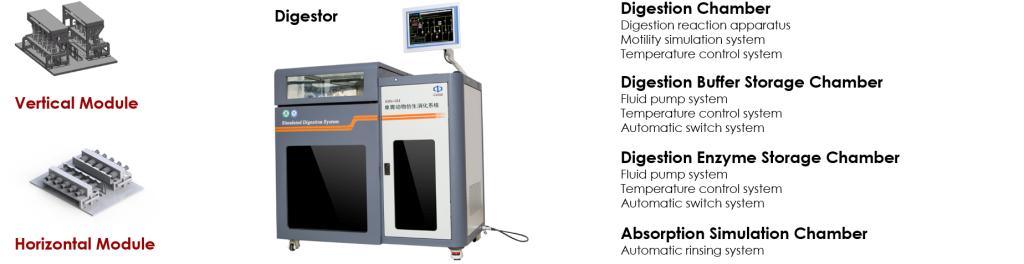
In Vitro Automated Simulated Digestion System (SDS III) establishes a new benchmark for modern feed evaluation by combining the physiological relevance of in vivo digestion with the efficiency and standardization of advanced in vitro technology. It represents a significant technological advance in biomimetic feed evaluation: innovative and patented automatic digestion device with species-specific simulated digestive kits for poultry, swine and pet animals, closely reproduce physiological digestive processes.
Through the fully automated synchronization of enzyme delivery, pH adjustment, buffer infusion, and hydrolysate removal, SDS III transforms conventional manual in vitro assays into a highly standardized, fully automated workflow. By enabling rapid, reliable, and sustainable nutritional assessment, SDS III addresses longstanding challenges in feed research and quality control and supports the global transition toward ethical animal research in accordance with the 3Rs principles (Replacement, Reduction, and Refinement).
From Digestion to Metabolism and Animal Growth, From Laboratory Precision to Precise Feeding
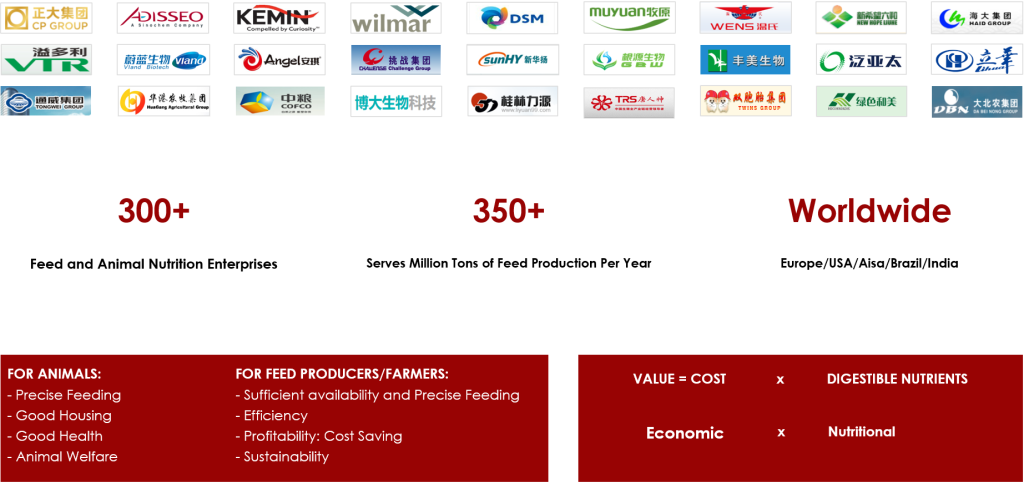
SERVES CUSTOMERS WORLDWIDE
THE INDUSTRIALIZED TECHNIQUES TO EVALUATE FEEDS AND FEEDSTUFFS
• Precisely reproduces dynamic digestive conditions (pH, temperature, enzyme activity, transit time).
• Offers high flexibility and ease for analyzing the bioavailability of major nutrients via species- and nutrient-specific simulated digestive fluid kits.
• Validated test outcomes, achieves reputation in feed and animal nutrition industry worldwide.
• Generates results 66 times faster than conventional in vivo trials, supporting high-throughput screening of feed ingredients.
• Cuts analytical costs by approximately 90% compared with live animal experiments.
• Minimizes manual operation and reliance on technicians, ensuring consistent, reproducible results across operators and laboratories.
• Reduces inter-laboratory variability with standardized protocols and calibrated instrumentation.
• Provides a fully animal-free feed evaluation method consistent with the 3Rs principle (Replacement, Reduction, Refinement) in animal research.
FORMULATE YOUR PRECISION NUTRITION PLAN WITH SDS III

1)- Build unique and dynamic feedstuffs nutrition by precisely evaluating the true energy values of feeds and feed ingredients;
2)- Quality monitoring for feeds and feed raw materials;
3)- Identify non-conventional or non-grain feed raw materials;
4)- Feeds formula optimization;
5)- Precisely livestock breeding;
6)- Feed enzymes’ performance evaluation;
7)- Multienzymes premix designing and evaluation;
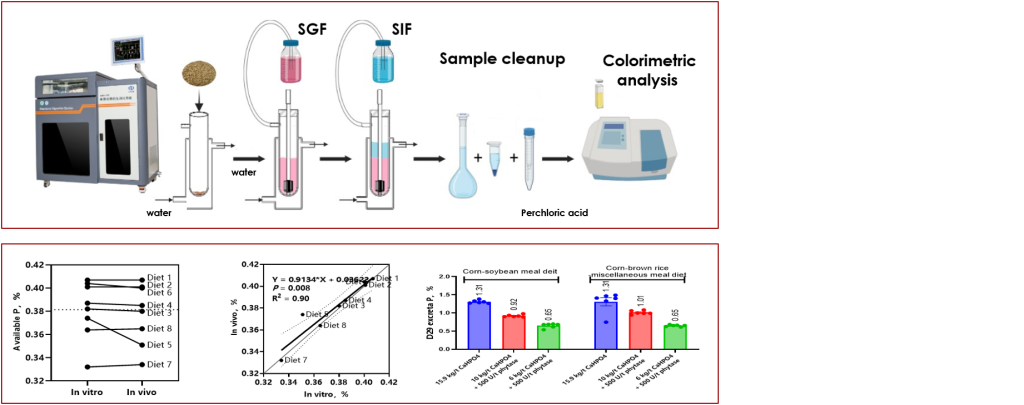
8)- Phytase and available phosphorus determination;
9)- Build feeding standards, dynamic nutritional requirements.
HOW DOES SDS III CONTRIBUTE TO YOUR FUTURE SUCCESS?
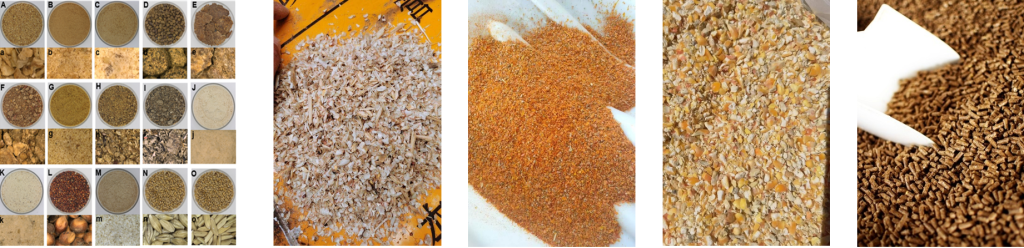
1)Build Unique and Dynamic Feedstuffs Nutrition Database
SDS system is the technique platform for feed/feed ingredient evaluation and feed formula development & optimization. Know the true energy value of each feed and feed ingredient.
2)Quality Monitoring for Feeds and Feed Raw Materials
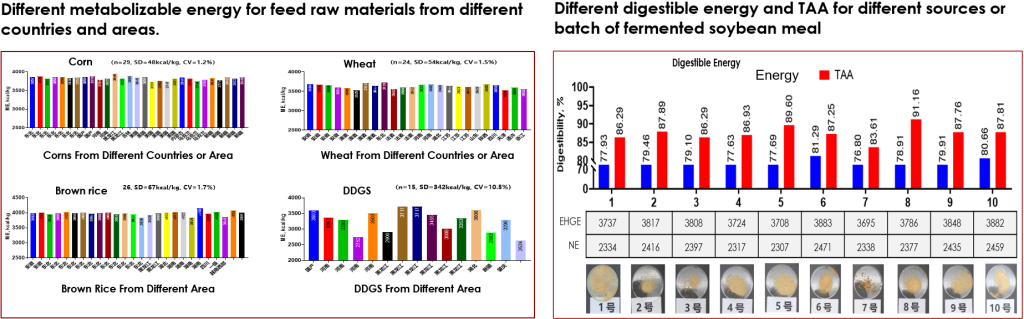
SDS III system is used to be the techniques platform for feed producers to build uniform QC monitoring standard for different feed production sites. Enable users to maintain a consistent quality level for their factories located in various countries or regions.
3)Feed Enzymes Evaluation and Multienzyme Premix Designing
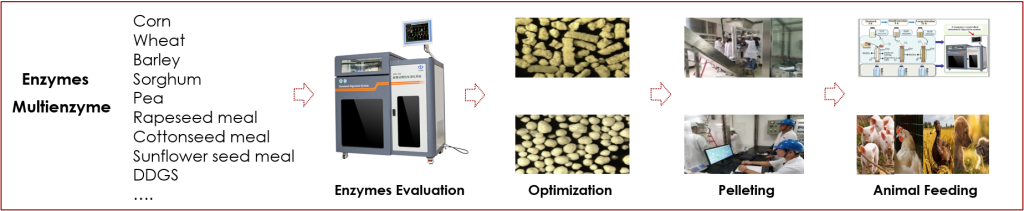
Enzymes Evaluation – Optimization – Pelleting – Animal Precisely Feeding
-How to quantitatively determine how much digestible energy, amino acids, phosphorus and other nutrients each enzyme and each complex enzyme formula can release under specific diet conditions?
-How to achieve a precise match among feed, enzymes, and animals, and provide precise nutritional support in different scenarios?
-How to analyze the synergistic / antagonistic relationships of multiple enzymes and release the synergistic nutritional benefits?
-How to achieve the dual precise nutritional goal of “nutrient supply + intestinal health regulation”?
-How to precisely achieve the nutritional balance of low-protein, low-phosphorus and other target diets?
4)Phytase and Available Phosphorus Determination
-Quantify the actual amount of phosphorus that can be absorbed and utilized by animals;
-Achieve precise evaluation of the effect of phytase, and quantify “phytase – phosphorus release amount”.
-Establish “effective phosphorus databases” for various feed raw materials.
-Carry out preliminary screening for efficient phosphorus release of formulations and enzyme preparations, build “closed-loop evaluation system of in vitro rapid assessment – in vivo verification”.
-Achieve precisely matching of dietary phosphorus supply with demand.